
Six energy guides, in reading order
Each guide takes one idea about energy and follows it through everyday life, with its facts taken from government science agencies, NIST and university physics pages. Read them in order the first time; after that, the units table is the page to keep open.
-
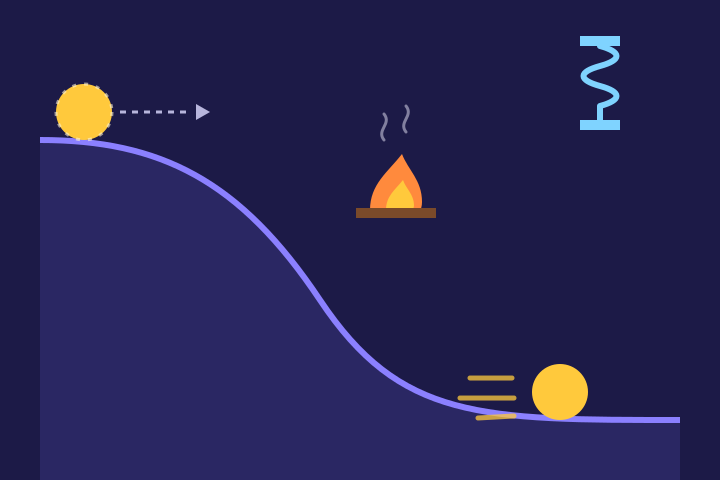
The forms of energy: stored and in motion
What physicists mean by energy, why every form is either stored (potential) or moving (kinetic), and how chemical, thermal, radiant, electrical and other forms fit together.
-

Conversion and conservation: energy changes form, never amount
The law of conservation of energy, why every conversion produces some energy that is not useful, and what efficiency means when a machine turns one form into another.
-

Sunlight: the energy that crosses empty space
How the Sun makes energy by fusing hydrogen into helium, how that energy travels to Earth as electromagnetic waves, and how wavelength, frequency and energy are linked.
-
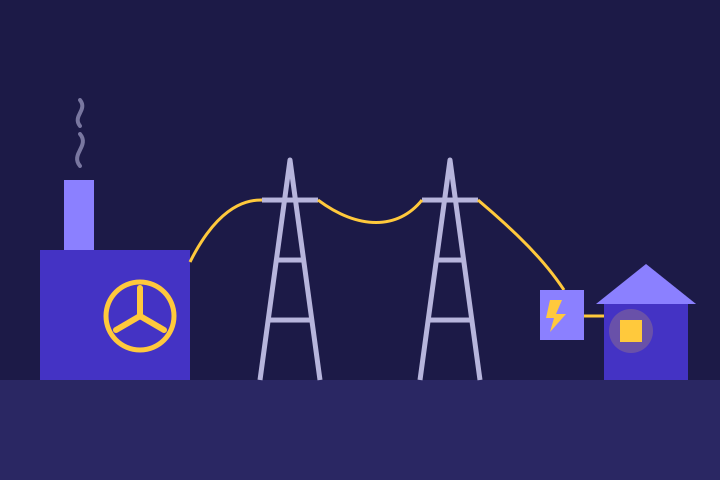
How electricity reaches a home
What electricity is at the scale of atoms, how a generator turns motion into current, and how transformers, transmission lines and distribution lines carry it to a wall socket.
-

Energy at home: watts, kilowatt-hours and efficiency
The difference between power and energy, how a kilowatt-hour is defined, how to estimate what an appliance uses from its wattage, and how heat, light and motion share the total.
-

Energy in food: what a calorie measures
The physics behind the calorie on a food label: how the calorie and kilocalorie are defined, how they convert to joules, and why the body turns most food energy into heat.
-

Energy and power units, side by side
The joule, watt, kilowatt-hour, British thermal unit, calorie, kilocalorie and electronvolt in one table, with each conversion factor taken from NIST or the EIA.